
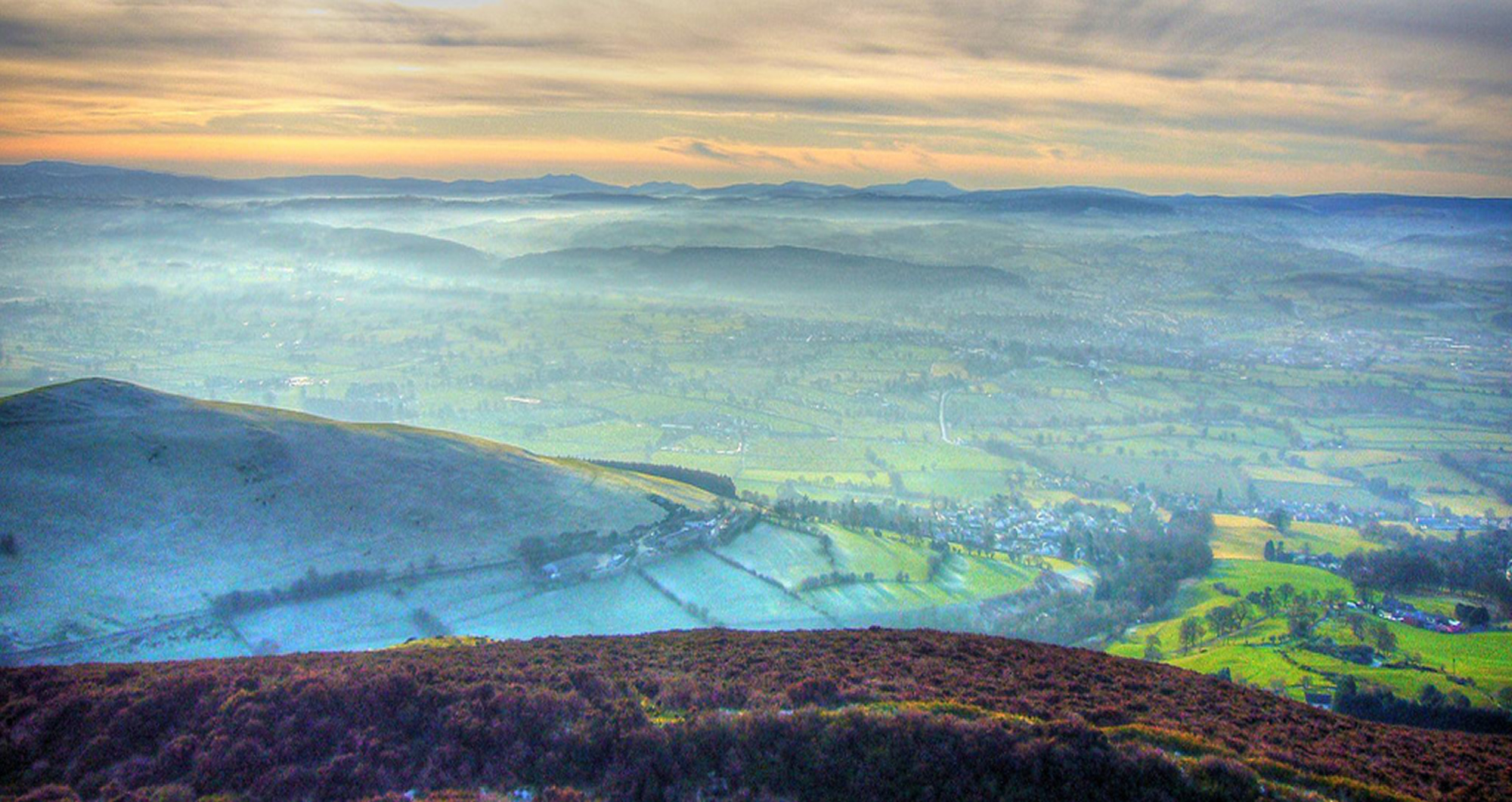
Ruthin sits at the heart of the Vale of Clwyd, a medieval market town of extraordinary character surrounded by some of the finest countryside in North Wales. It has a castle, a Victorian gaol, the oldest surviving timber-framed house in Wales, an exceptional collection of medieval and Tudor buildings, and a market tradition rooted in a 13th-century borough charter, now continued at Ruthin Market Hall. It is also largely undiscovered by the wider tourism world, which makes it one of the most rewarding places in Wales to spend time.

History
700 years of remarkable stories
Explore →
Ruthin Castle
Medieval fortress, now a hotel
Explore →
Ruthin Gaol
Victorian prison, now a museum
Explore →
Nantclwyd House
Oldest house in Ruthin, 1314
Explore →
Town Square
Medieval streets intact
Explore →Market Hall
Independent traders on Market St
Explore →
Walking
Clwydian Range & Vale
Explore →Eating Out
Pubs, restaurants & cafes
Explore →Stay
Hotels, B&Bs & self-catering
Explore →
Day Trips
Llangollen, Denbigh, Chester
Explore →Getting Here
By car from Chester, Wrexham & Rhyl
Explore →Honest Guide
Who should come and why
Explore →Why Ruthin?
The short answer is that Ruthin is the kind of Welsh market town that most visitors to North Wales miss entirely. They go to Conwy, they go to Llandudno, they go to Snowdonia — and Ruthin sits quietly in its valley, essentially unchanged in its medieval bones, getting on with being one of the finest small towns in Wales. If you want a North Wales experience that feels genuinely authentic rather than tourist-facing, Ruthin is where you should go.
The town square is flanked by buildings that span six centuries. The castle — begun by Edward I's man Reginald de Grey in 1277 — is now a luxury hotel, but you can walk its grounds. The gaol on Clwyd Street is a genuine Victorian prison that ran until 1916 and is now open to visitors. Nantclwyd House in Castle Street, built in 1314, is the oldest surviving townhouse in Wales and one of the most significant medieval buildings in North Wales. These things are all within five minutes' walk of each other.
Ruthin is also the gateway to the Clwydian Range Area of Outstanding Natural Beauty — the ridge of hills that forms the eastern wall of the Vale of Clwyd, rising to Moel Famau at 554 metres. The walking from the town is exceptional, and the views from the ridge on a clear day take in the whole of North Wales from the Dee Estuary to Snowdon.
Getting There
Ruthin is on the A494 between Mold and Corwen, and the A525 connects it to Rhyl and Denbigh. There is no direct rail service — the nearest stations are Rhyl (18 miles north) and Wrexham (18 miles east). By car from Chester it is about 40 minutes; from Manchester, roughly 90 minutes. See our full getting here guide for details.
Frequently Asked Questions
What is Ruthin known for?
Ruthin is known as a medieval market town in the Vale of Clwyd, North Wales, with an exceptional concentration of historic buildings including Ruthin Castle (now a hotel), the Victorian gaol, Nantclwyd House (the oldest townhouse in Wales, built 1314), and a market tradition dating to its 13th-century borough charter, now continued at Ruthin Market Hall.
Is Ruthin worth visiting?
Yes — Ruthin offers more genuine medieval heritage per square mile than almost anywhere on the North Wales coast, with free and paid attractions, excellent walking on the Clwydian Range, and a working market town character that most tourist destinations have lost.
How do I get to Ruthin?
Ruthin is best reached by car: 40 minutes from Chester via the A55 and A494, 30 minutes from Rhyl on the A525, and 30 minutes from Wrexham on the A525. There is no direct rail link; the nearest stations are Rhyl and Wrexham.